What workplaces — and the people in them — actually need to do for neurodivergent team members
 Every March, organisations update their LinkedIn banners, share infographics about ADHD and autism, and post statistics about the percentage of the population who are neurodivergent. And every March, neurodivergent employees and the people who support them watch — often from behind closed doors, often exhausted — and wonder whether anything will actually change.
Awareness is not nothing. But it is not enough. And the gap between the two is not just uncomfortable. It is costing people their careers, their health, and in some cases far more than that.
This is what that gap actually looks like in practice — and what crossing it requires.
The disclosure trap
Most workplace neurodiversity support is gated behind disclosure. Tell us you’re neurodivergent, and we’ll tell you what we can offer. The problem is that disclosure requires trust that many neurodivergent employees — particularly those who have previously been penalised, overlooked, or quietly managed out — simply do not have.
The burden of proof is exhausting. Formal diagnoses are expensive and inaccessible. And once you have disclosed, you cannot un-disclose. Many employees have watched colleagues share their diagnoses and become subtly (or not so subtly) sidelined as a result.
An organisation that only supports disclosed neurodivergent employees is not an inclusive organisation. It is an organisation that has made support conditional on vulnerability.
The shift required: build environments that work for neurodivergent people by default, rather than by exception. Universal design is not a radical concept — it simply means that good design serves everyone.
Reasonable adjustments are not a favour
In the UK, reasonable adjustments for disabled employees — which includes many neurodivergent people — are a legal requirement under the Equality Act 2010. Not a perk. Not something to be negotiated. A legal obligation.
And yet the process of obtaining them is frequently arduous, demoralising, and slow. Employees report being asked to justify their needs repeatedly, being told requests are “not possible,” or finding that adjustments agreed on paper quietly disappear in practice.
Common adjustments that genuinely make a difference include: written summaries after verbal meetings, advance notice of agenda items, flexible start and finish times, noise-cancelling headphones or quiet working spaces, clear and explicit communication about expectations, and extended deadlines for administrative tasks.
None of these are expensive. Most cost nothing. The barrier is not resource — it is will, and the organisational culture that surrounds it.
For support workers: You can play a direct role in helping someone identify what adjustments would actually help them — often they haven’t been given the language or the framework to articulate this themselves. Help them make a specific, written request rather than a general one. “I find it hard to process verbal instructions under pressure” is harder for a manager to act on than “it would help me if meeting actions were sent in writing within 24 hours.” You can also help them follow up if agreed adjustments aren’t being implemented, and support them in understanding their rights if they’re being stalled or refused.
Recruitment is where inclusion goes to die
Organisations frequently say they want to attract neurodivergent talent while running recruitment processes almost perfectly designed to filter it out.
Competency-based interviews that rely on unstructured conversation and eye contact. Psychometric tests with no adjustment provisions. Ambiguous job descriptions filled with social requirements that have nothing to do with the role. Group assessment days. Timed tasks with no advance information.
A neurodivergent candidate who cannot perform well in an interview but would be exceptional in the role is not failing — the process is failing them.
What better recruitment looks like: sharing questions in advance, offering alternative formats, providing clear and structured information about the role, removing requirements that are not genuinely necessary, and building in extra time as standard rather than on request.
For support workers: If the person you support is job-seeking, you can help them navigate the process at every stage — from identifying roles that play to their strengths, to helping them request adjustments at interview, to preparing them practically for what to expect. Many neurodivergent people don’t know they can ask for questions in advance, that they can request extra time, or that they can bring notes into an interview. You can also help them identify employers whose processes are genuinely more accessible, and support their self-advocacy if their requests are ignored. The recruitment stage is high-stakes and often high-anxiety, so in reducing that you can make the difference between finding a new job and not.
Management is the make-or-break factor
A neurodivergent employee can thrive in a supportive team and struggle profoundly in an identical role with a different manager. The research on this is consistent, and the lived experience of neurodivergent workers confirms it.
Managers do not need to be neurodiversity experts. They need to be curious, flexible, explicit in their communication, and willing to do things differently if the standard approach is not working for a member of their team.
What they currently often receive: a one-hour e-learning module, if anything at all.
Meaningful management training — ongoing, practical, and grounded in real scenarios — is not a luxury item in an organisation that claims to value neurodiversity. It is a minimum baseline.
For support workers: You will sometimes have a clearer picture of how a neurodivergent person is experiencing their manager than the manager has of themselves. When things are going well, you can help the person articulate what is working so they can advocate for more of it. When things are not going well, you can help them identify whether the issue is a specific behaviour, a communication style, or a structural problem — and that distinction matters for deciding what to do next. In some cases, with the person’s consent, a support worker can attend a meeting with a manager and help bridge communication gaps directly. That kind of supported conversation can change a working relationship significantly.
Performance management as a weapon
Performance management processes disproportionately capture neurodivergent employees. This is not always deliberate — it is often the result of systems designed around neurotypical defaults, measuring outputs in neurotypical ways, and escalating when someone does not meet those measures rather than asking why.
For many neurodivergent employees, a performance improvement plan is not a support mechanism. It is the beginning of the end, and they know it.
Organisations that are serious about inclusion examine their performance data. They ask whether certain groups are disproportionately represented in disciplinary or performance processes. They treat disparity as a signal that the system needs examining, not just the individual.
For support workers: If someone you support is placed on a performance improvement plan or facing disciplinary action, one of the most important things you can do is ensure they understand what is happening and what their rights are. Many neurodivergent people — particularly those with anxiety or processing differences — can struggle to absorb and retain the content of difficult meetings, or to respond assertively in the moment. You can help them prepare, attend as a support person where allowed, help them write a written response, and connect them with advocacy services if needed. You can also help them identify whether what is happening constitutes disability discrimination — something they may not have considered or felt confident naming.
Culture is the infrastructure that everything else runs on
Policies, adjustments, and training all matter. But they operate within a culture — and if that culture sends the signal that difference is tolerated rather than valued, the policies become window dressing.
Culture is built in small moments. It is the meeting where someone’s communication style is mocked after they leave. The offhand comment about someone “just needing to get organised.” The decision made in a room without the person it affects. The team lunch in a loud, crowded restaurant that one person quietly didn’t attend.
Belonging is not created by a policy document. It is created by the daily experience of being in a place where you do not have to perform a version of yourself that drains you just to get through the day.
For support workers: Culture change is slow and often feels far outside an individual support worker’s influence. But you interact with workplace culture at ground level, and that matters more than it might seem. You can gently challenge stigmatising language when you hear it. You can help the person you support to debrief after difficult experiences rather than internalise them. You can model the kind of direct, respectful communication that makes workplaces safer for neurodivergent people. And you can help someone distinguish between a workplace that is genuinely trying and getting it wrong sometimes, and one that is fundamentally unsafe — because those require very different responses.
What this week is actually for
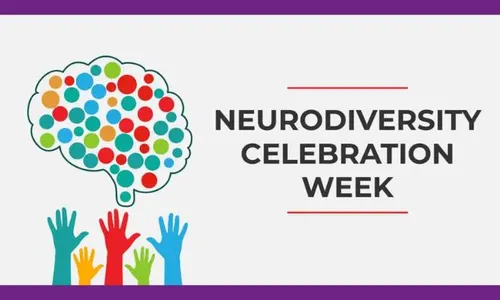
Neurodiversity Celebration Week is a chance to start or deepen a conversation. It is not a finishing line. If the only thing your organisation does this week is post on LinkedIn, you have not participated in anything except your own brand management.
The question worth sitting with — whether you’re an employer, a manager, or someone who supports neurodivergent people day to day — is this: if you asked the neurodivergent people in your orbit, anonymously and genuinely, whether they feel safe, supported, and able to do their best work, what would they say?
That answer, whatever it is, is where the real work begins.
For support workers: You sit closer to that answer than almost anyone else. Use this week not just to share content, but to ask the people you support how they’re actually doing at work — and to listen to what they say. Sometimes the most powerful thing is simply bearing witness to someone’s experience and helping them know it matters.