What Neurodivergent Professionals pay every day — and what the alternative looks like
The performance nobody asked for
Most workplaces aren’t designed for neurodivergent people. They’re designed for a particular way of processing information, communicating, organising time, and moving through the physical environment — and that way tends to be neurotypical.
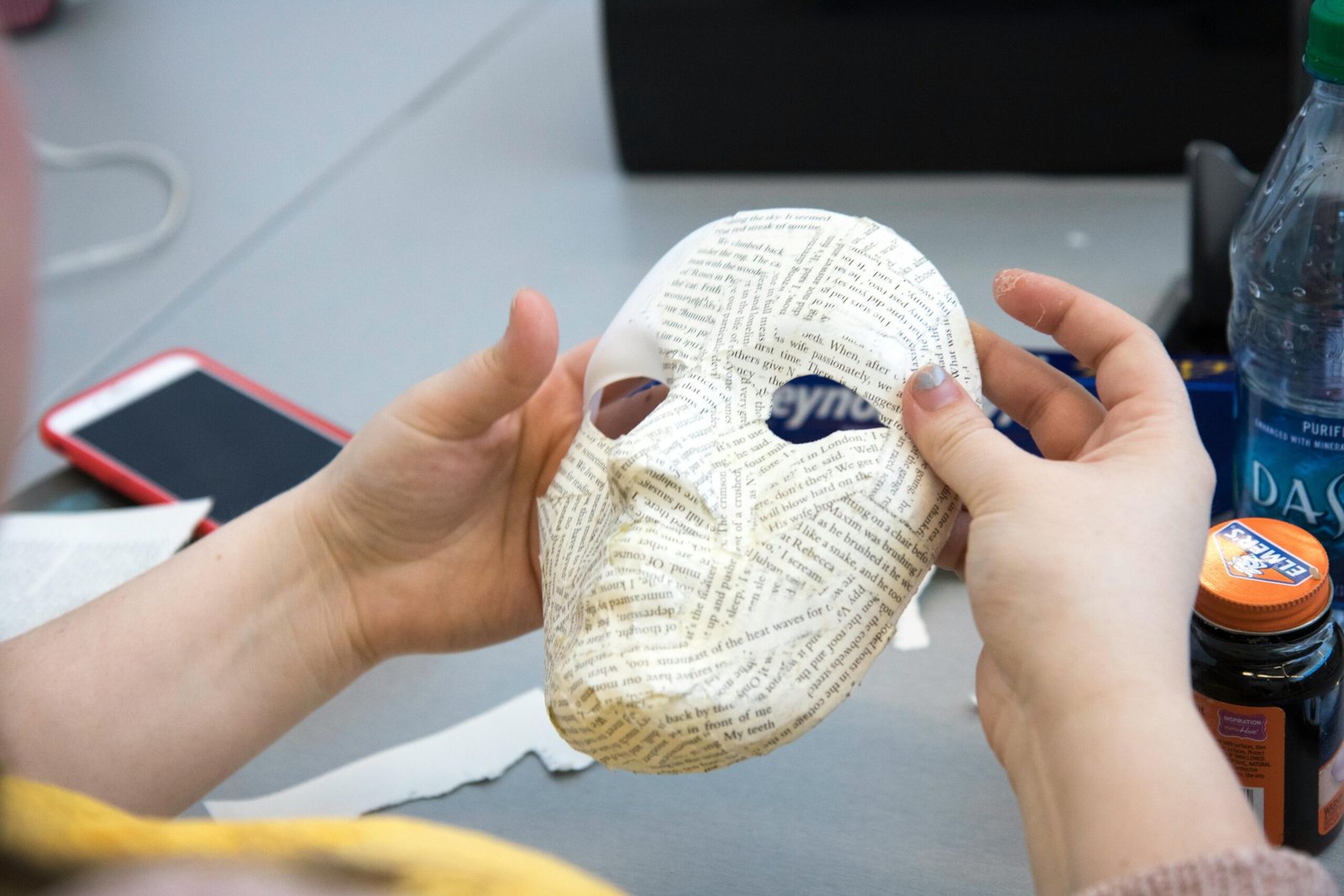
For neurodivergent professionals, navigating these environments requires something that researchers have come to call masking: the conscious or unconscious suppression of behaviours that feel natural, and the simultaneous performance of behaviours that the workplace expects but that don’t come naturally at all.
Masking looks different for different people. It might be eye contact maintained at significant cognitive effort. The impulse to move or fidget suppressed throughout a two-hour meeting. The instinct to respond directly and honestly, filtered through several rounds of internal editing to avoid coming across as blunt. The way a message needs to be checked and re-checked before sending — not for accuracy, but for tone — because getting the tone wrong has consequences, and neurodivergent people tend to learn this early.
It is exhausting in a way that is difficult to communicate to someone who has never had to do it. Not because any single instance is overwhelming, but because it is constant. Every interaction, every meeting, every email, every moment in a shared space carries the low-level weight of the performance.
The compounding cost
The problem with masking isn’t just that it’s tiring. It’s that it compounds.
The energy that goes into masking is energy that isn’t going into the actual work. Into the creative thinking. Into the strategic decisions. Into the output that an employer is paying for, and that the person is genuinely good at.
Over time, the deficit accumulates. What starts as a sustainable — if difficult — effort tends to become, across months and years, something closer to burnout. Research consistently shows elevated rates of anxiety, depression, and burnout among neurodivergent adults, and masking is a significant contributor to all three.
There’s another consequence that receives less attention: career stagnation. When a significant portion of cognitive resource is going into the performance of being an acceptable employee, less of it is available for the things that drive career development — building relationships, taking creative risks, proposing ideas, pursuing opportunities. Neurodivergent professionals are often working significantly harder than their neurotypical colleagues while appearing, to those colleagues, to be less driven.
The gap between what a neurodivergent professional is capable of and what they’re able to demonstrate at work is frequently explained almost entirely by this kind of invisible labour.
What the research says — and what it doesn’t address
There is a growing body of research on masking, particularly in relation to autism and ADHD. What it consistently finds is that masking is associated with poorer mental health outcomes, and that the ability to reduce masking — to be more authentically oneself at work — is associated with better wellbeing and higher job satisfaction.
What the research doesn’t always address is the practical question: how?
The common answer is “psychological safety” — a culture in which neurodivergent people feel accepted enough to drop the mask. That matters, and workplaces should be actively building it. But it assumes the primary obstacle is internal or cultural. For many neurodivergent professionals, the obstacle is also deeply practical: the administrative friction that generates daily panic. The systems that don’t stay organised without constant effort. The deadlines tracked in three different places that still fall through the gaps. The cognitive load of tasks that neurotypical colleagues handle in minutes and that take disproportionate effort.
When these practical burdens are lifted, masking often reduces — not because the culture has changed, but because there is less to compensate for. Less to manage. Less to hide.
What the alternative looks like
Reinforce Potential was founded on this insight. Our founder experienced it directly: the discovery that a skilled, well-matched support worker didn’t just help with tasks. It changed the shape of the working day entirely.
When the administrative friction is being handled, the anxiety around it reduces. When deadlines are being tracked and managed, the background hum of dread that comes from keeping everything in your head goes quiet. When someone else is managing the correspondence that triggers rumination, you stop thinking about it.
The energy that was going into compensation — into the masking, into the performance, into holding everything together — becomes available again.
This is what our clients describe, consistently, after a few months of working with a support worker. Not just that specific tasks are being done. But that they feel different. More capable. Less at war with their own working day.
Practical support and cultural change
It would be easy to read this as an argument against cultural change — as though practical support could replace the work of making workplaces genuinely inclusive. It can’t, and that isn’t the argument.
Cultural change matters. Neurodivergent professionals deserve workplaces where they don’t have to mask at all — where difference is genuinely accepted, where communication styles are accommodated, where there is no subtext of conformity attached to being taken seriously.
But cultural change is slow. It requires leadership commitment, widespread awareness, and systemic shifts that take years to embed. And neurodivergent professionals are navigating their careers right now — not in the more inclusive workplace of the future.
Practical support, in the form of a skilled, well-matched assistant, can change things this week. In ways that are immediate, measurable, and lasting.
Who this is for
If you’re a neurodivergent professional who recognises anything in what you’ve just read — the exhaustion, the invisible effort, the gap between your capability and what you’re able to demonstrate at work — we’d like to hear from you.
What we offer is not a generic administrative service. It is a careful matching process, specialist training, and a genuine commitment to understanding what’s actually getting in the way for you, specifically. We also help clients explore Access to Work funding, where applicable, so the cost of support isn’t a barrier.
The masking tax is real. But it isn’t permanent. And you don’t have to keep paying it alone.
Get in touch at reinforcepotential.co.uk or call 01843 835 551.
If you’re a self-employed neurodivergent professional and any of this resonates, we’d genuinely like to talk.
📞 01843 835 551 ✉ support@reinforcepotential.co.uk 🌐 reinforcepotential.co.uk
Ready to explore support? Get in touch here. Interested in working with us? Find out more here.